top of page
This site was designed with the
.com
website builder. Create your website today.
Start Now
QUOIN TAG-AT
VIDEO EDITOR
HOME
PORTFOLIO
ABOUT ME
More...
Use tab to navigate through the menu items.
Video Reel 2023
Play Video
Facebook
Twitter
Pinterest
Tumblr
Copy Link
Link Copied
All Videos
Play Video
Play Video
06:15
Morning Anxiety? It Might Be Cortisol Awakening Response
Learn how the Cortisol Awakening Response contributes to morning anxiety and discover effective strategies to manage it with Therapy in a Nutshell. Join Therapy in a Nutshell’s membership: https://courses.therapyinanutshell.com/membership You'll get instant access to all 10 life-changing courses, live weekly Q&As, and a supportive community for just $27/month. Learn how to manage anxiety, process trauma, regulate emotions, and build lasting resilience so that you can live a deeply rich and meaningful life! If you go to bed worrying about your day, your body’s like, “Hey, let me help you out. I’m going to give you a dump truck load of cortisol the minute you wake up, doesn’t that sound great?” Then you may experience anxiety upon waking. This is called the cortisol awakening response. It's connected to your circadian rhythm, and depending on how you look at it, it’s a blessing or a curse. If you wake up to anxiety first thing in the morning, you know how uncomfortable it can be. In this video we’re going to talk about how cortisol is different in the morning and what you can do about it to better decrease your morning anxiety. Cortisol is a stress hormone that your adrenal glands pump out in response to fear or stress. It helps your body prepare for action and it makes your heart beat faster, and can make you feel jittery and anxious. Even for people without high levels of stress cortisol levels are generally highest within the first hour of waking up. Some people wake up with a jolt of anxiety, so powerful that it makes the whole day seem overwhelming. Some people feel frozen in their beds. Some people get activated, irritable, jittery about their day or engage in frenetic activity (this one’s me). Or that jolt of cortisol makes some people wake up to panic attacks or feel like they’re about to have one. Not the way you wanted to wake up. Why would your body do that? Cortisol’s function is to help you get alert and perform. If you’re playing soccer, cortisol helps you get pumped up and play hard. Cortisol can help you be motivated to finish a report for work or jump out of the way of a speeding car. But if you go to bed worrying about everything you have to do tomorrow, the brain makes a secret plan: “I’m going to help my human get super activated right when he wakes up.” So it plans a little surprise party for you. Alarm goes off, Surprise! Dump-truck load of cortisol.” Looking for affordable online therapy? My sponsor, BetterHelp, connects you to a licensed professional from the comfort of your own home. Try it now for 10% off: https://betterhelp.com/therapyinanutshell Learn more in one of my in-depth mental health courses: https://courses.therapyinanutshell.com/?utm_campaign=02102022&utm_medium=Description&utm_source=YouTube Support my mission on Patreon: https://www.patreon.com/therapyinanutshell Sign up for my newsletter: https://courses.therapyinanutshell.com/free-resources Check out my favorite self-help books: https://kit.co/TherapyinaNutshell/best-self-help-books Check out my podcast, Therapy in a Nutshell: https://tinpodcast.podbean.com/ Therapy in a Nutshell and the information provided by Emma McAdam are solely intended for informational and entertainment purposes and are not a substitute for advice, diagnosis, or treatment regarding medical or mental health conditions. Although Emma McAdam is a licensed marriage and family therapist, the views expressed on this site or any related content should not be taken for medical or psychiatric advice. Always consult your physician before making any decisions related to your physical or mental health. In therapy I use a combination of Acceptance and Commitment Therapy, Systems Theory, positive psychology, and a bio-psycho-social approach to treating mental illness and other challenges we all face in life. The ideas from my videos are frequently adapted from multiple sources. Many of them come from Acceptance and Commitment Therapy, especially the work of Steven Hayes, Jason Luoma, and Russ Harris. The sections on stress and the mind-body connection derive from the work of Stephen Porges (the Polyvagal theory), Peter Levine (Somatic Experiencing) Francine Shapiro (EMDR), and Bessel Van Der Kolk. I also rely heavily on the work of the Arbinger institute for my overall understanding of our ability to choose our life's direction. And deeper than all of that, the Gospel of Jesus Christ orients my personal worldview and sense of security, peace, hope, and love https://www.churchofjesuschrist.org/comeuntochrist/believe If you are in crisis, please contact the National Suicide Prevention Hotline at https://suicidepreventionlifeline.org/ or 1-800-273-TALK (8255) or your local emergency services. Copyright Therapy in a Nutshell, LLC ---- Music licensed from www.Bensound.com or Artlist.io Images from Freepik.com (premium license), Pixabay, or Wikimedia commons
Play Video
Play Video
07:29
7 Signs You're Not Dealing With Your Grief and Loss
Recognize 7 signs of unresolved grief and learn effective strategies to process loss. Improve mental health by addressing grief with expert guidance. Join Therapy in a Nutshell’s membership: https://courses.therapyinanutshell.com/membership You'll get instant access to all 10 life-changing courses, live weekly Q&As, and a supportive community for just $27/month. Learn how to manage anxiety, process trauma, regulate emotions, and build lasting resilience so that you can live a deeply rich and meaningful life! Learn 9 Keys to Moving Through Grief in this online course by a grief expert: https://courses.therapyinanutshell.com/understanding-grief-loss-and-mourning-1/?utm_medium=YTDescription&utm_source=YouTube What happens when you don’t process your grief? What happens when you avoid dealing with loss? People say that time heals, but I would argue that it doesn’t unless you allow yourself to work through your pain little by little. Now it’s clear that each person’s grief is unique, there isn’t a concrete set of steps you can do in order, there isn’t a time limit for mourning. But there is a big difference between working through stuff and not working through stuff. People who process their grief allow themselves to face their pain, even in small doses. They address their feelings, they may talk about them or write about them, they mourn. When someone doesn’t work through their pain, they try to distract themselves, they keep busy, they desperately avoid their pain, which in the long run leads to more pain. So we’re going to talk about 7 signs that you’re not processing your grief. And you’ll learn 3 ways to start to face your grief in small steps. Recently I partnered with Sarah Engler, LCSW, to create a course called ”Understanding Grief and Loss”. She teaches how loss can stem from a loved one dying, but it can also come from many more situations- like a divorce, an expectation that doesn’t happen, a lifecycle change like aging or change in employment, and so many more situations where you may experience strong emotions about losing something you care about. Sarah does a great job explaining how not dealing with your loss can lead to these 7 signs. 00:00 Intro 01:08 Understanding Grief And Loss 01:43 Compulsive Behaviors 01:59 Withdrawal From Relationships 02:14 Over Functioning 02:41 Irritability 03:10 Sleep Issues 03:26 Physical Symptoms 03:43 Mental Health Symptoms 04:55 Pendulation 06:08 Resourcing 06:40 Titration Transcript below: https://therapyinanutshell.com/7-signs-youre-not-dealing-with-your-grief-and-loss/ Looking for affordable online therapy? My sponsor, BetterHelp, connects you to a licensed professional from the comfort of your own home. Try it now for 10% off your first month: https://betterhelp.com/therapyinanutshell Learn more in one of my in-depth mental health courses: https://courses.therapyinanutshell.com/?utm_medium=YTDescription&utm_source=YouTube Support my mission on Patreon: https://www.patreon.com/therapyinanutshell Sign up for my newsletter: https://courses.therapyinanutshell.com/free-resources Check out my favorite self-help books: https://kit.co/TherapyinaNutshell/best-self-help-books Check out my podcast, Therapy in a Nutshell: https://tinpodcast.podbean.com/ Therapy in a Nutshell and the information provided by Emma McAdam are solely intended for informational and entertainment purposes and are not a substitute for advice, diagnosis, or treatment regarding medical or mental health conditions. Although Emma McAdam is a licensed marriage and family therapist, the views expressed on this site or any related content should not be taken for medical or psychiatric advice. Always consult your physician before making any decisions related to your physical or mental health. In therapy I use a combination of Acceptance and Commitment Therapy, Systems Theory, positive psychology, and a bio-psycho-social approach to treating mental illness and other challenges we all face in life. The ideas from my videos are frequently adapted from multiple sources. Many of them come from Acceptance and Commitment Therapy, especially the work of Steven Hayes, Jason Luoma, and Russ Harris. The sections on stress and the mind-body connection derive from the work of Stephen Porges (the Polyvagal theory), Peter Levine (Somatic Experiencing) Francine Shapiro (EMDR), and Bessel Van Der Kolk. I also rely heavily on the work of the Arbinger institute for my overall understanding of our ability to choose our life's direction. And deeper than all of that, the Gospel of Jesus Christ orients my personal worldview and sense of security, peace, hope, and love https://www.churchofjesuschrist.org/comeuntochrist/believe If you are in crisis, please contact the National Suicide Prevention Hotline at https://suicidepreventionlifeline.org/ or 1-800-273-TALK (8255) or your local emergency services. Copyright Therapy in a Nutshell, LLC
Play Video
Play Video
15:41
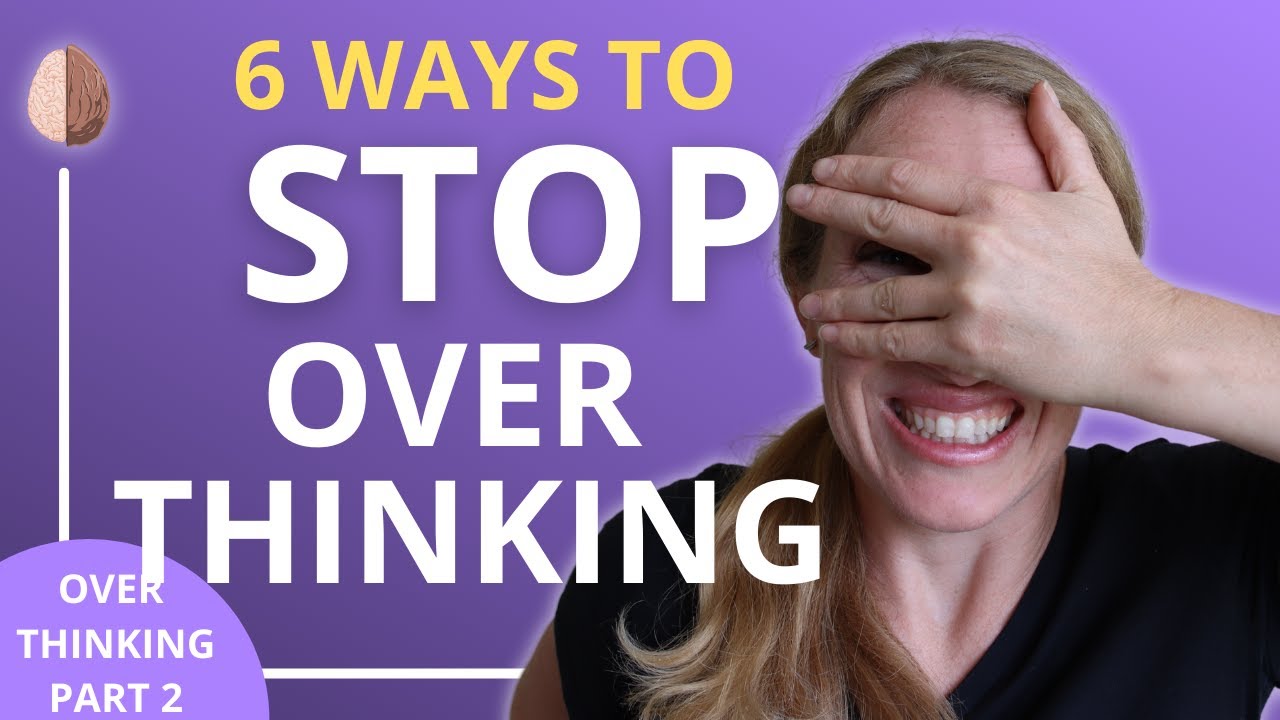
6 Therapy Skills to Stop Overthinking Everything
Discover 6 therapy skills to stop overthinking. Learn how to manage anxiety, reduce rumination, and improve mental health with expert tips from Emma McAdam. Join Therapy in a Nutshell’s membership: https://courses.therapyinanutshell.com/membership You'll get instant access to all 10 life-changing courses, live weekly Q&As, and a supportive community for just $27/month. Learn how to manage anxiety, process trauma, regulate emotions, and build lasting resilience so that you can live a deeply rich and meaningful life! Looking for affordable online therapy? My sponsor, BetterHelp, connects you to a licensed professional from the comfort of your own home. Try it now for 10% off your first month: https://betterhelp.com/therapyinanutshell OK, so how can we stop overthinking everything? 1. The very first skill to stop overthinking is noticing and naming. Rumination is a bad habit that we’re often not aware we’re doing. First, get really good at identifying overthinking, say it out loud “I’m overthinking.” Ask someone to point it out to you. Learn your triggers. What time of day are you most likely to ruminate? Where are you most likely to overthink? At work? When you’re alone? When you’re at the bar? What situations trigger it? Try to predict it. So if you’re most likely to overthink something right as you go to bed or right after a social situation, prepare yourself to notice it so that you shift your focus to something more helpful. If you’re struggling to catch yourself overthinking, you could set an alarm on your phone to go off once an hour and check how much you’ve been ruminating that hour. And just track it for a week. In general, people tend to ruminate the most when they have nothing to occupy their attention. Now that you’ve gotten good at noticing when you’re overthinking, we’re going to take 2 approaches to stop overthinking everything. 1- setting limits on overthinking and 2- learn a bunch of ways to redirect your thoughts to something more helpful. Learn more in one of my in-depth mental health courses: https://courses.therapyinanutshell.com/?utm_medium=YTDescription&utm_source=YouTube Support my mission on Patreon: https://www.patreon.com/therapyinanutshell Sign up for my newsletter: https://courses.therapyinanutshell.com/free-resources Check out my favorite self-help books: https://kit.co/TherapyinaNutshell/best-self-help-books Check out my podcast, Therapy in a Nutshell: https://tinpodcast.podbean.com/ Therapy in a Nutshell and the information provided by Emma McAdam are solely intended for informational and entertainment purposes and are not a substitute for advice, diagnosis, or treatment regarding medical or mental health conditions. Although Emma McAdam is a licensed marriage and family therapist, the views expressed on this site or any related content should not be taken for medical or psychiatric advice. Always consult your physician before making any decisions related to your physical or mental health. In therapy I use a combination of Acceptance and Commitment Therapy, Systems Theory, positive psychology, and a bio-psycho-social approach to treating mental illness and other challenges we all face in life. The ideas from my videos are frequently adapted from multiple sources. Many of them come from Acceptance and Commitment Therapy, especially the work of Steven Hayes, Jason Luoma, and Russ Harris. The sections on stress and the mind-body connection derive from the work of Stephen Porges (the Polyvagal theory), Peter Levine (Somatic Experiencing) Francine Shapiro (EMDR), and Bessel Van Der Kolk. I also rely heavily on the work of the Arbinger institute for my overall understanding of our ability to choose our life's direction. And deeper than all of that, the Gospel of Jesus Christ orients my personal worldview and sense of security, peace, hope, and love https://www.churchofjesuschrist.org/comeuntochrist/believe If you are in crisis, please contact the National Suicide Prevention Hotline at https://suicidepreventionlifeline.org/ or 1-800-273-TALK (8255) or your local emergency services. Copyright Therapy in a Nutshell, LLC
Play Video
Play Video
11:34
How to Be Less Emotionally Reactive: Black and White Thinking
Reduce emotional reactivity and improve mental health by challenging black and white thinking. Learn cognitive tools for emotional regulation and balance. Join Therapy in a Nutshell’s membership: https://courses.therapyinanutshell.com/membership You'll get instant access to all 10 life-changing courses, live weekly Q&As, and a supportive community for just $27/month. Learn how to manage anxiety, process trauma, regulate emotions, and build lasting resilience so that you can live a deeply rich and meaningful life! Get the free guide to this episode: https://courses.therapyinanutshell.com/pl/2147654246 Looking for affordable online therapy? My sponsor, BetterHelp, connects you to a licensed professional from the comfort of your own home. Try it now for 10% off your first month: https://betterhelp.com/therapyinanutshell Black-and-white thinking is when you take a situation and think about it in an extreme way, you push out all the nuance and turn it into something as intense as possible. You can usually recognize it when you use words like “Always, Never, Perfect, Terrible, Everything, Everyone, Nothing, Nobody, Worst, or Best. The Arbinger Institute calls these “Horribilizations” You take something and horriblize it. Notice how in these situations, black and white thinking exaggerates the situation. A husband says to his wife: “You NEVER do the dishes! I ALWAYS have to clean up after you!” Depressed Young Adult: “EVERYthing is awful. The world is a TERRIBLE place. Climate change is HOPELESS. I’ll NEVER be able to succeed. I’m NO good at math” Someone at work: My boss is the WORST communicator. A young mother: “I’m just a TERRIBLE person” or “She has it ALL together, she’s such a SAINT” Each time, the person takes a difficult situation and makes it horrible. They use the most extreme word. Never. Always. Everything. Hopeless. Terrible. The more extreme your thinking, the more intense your emotions will be, and the more likely you are to be depressed or anxious. But Black and White thinking also makes you helpless to escape that depression or anxiety. And it’s a lie. When you use B&W thinking, you are usually distorting nuanced reality by ignoring the good and exaggerating the bad. You’re lying. If it’s so awful, why do we do it? You subconsciously like black and white thinking because it serves a function in the short term. And like a drug, it makes you suffer in the long term. So what function does it serve? 00:00 Introduction to Emotional Reactivity 00:38 How to Identify Black and White Thinking 02:36 Why do we "like" black and white thinking? 05:52 How to be less emotionally reactive 06:15 How to reframe black and white thinking 07:10 How to think in the gray 10:15 summary of how to be less emotionally reactive Click below to access the transcript: https://therapyinanutshell.com/black-and-white-thinking/ Support my mission on Patreon: https://www.patreon.com/therapyinanutshell Sign up for my newsletter: https://courses.therapyinanutshell.com/free-resources Check out my favorite self-help books: https://kit.co/TherapyinaNutshell/best-self-help-books Check out my podcast, Therapy in a Nutshell: https://tinpodcast.podbean.com/ Therapy in a Nutshell and the information provided by Emma McAdam are solely intended for informational and entertainment purposes and are not a substitute for advice, diagnosis, or treatment regarding medical or mental health conditions. Although Emma McAdam is a licensed marriage and family therapist, the views expressed on this site or any related content should not be taken for medical or psychiatric advice. Always consult your physician before making any decisions related to your physical or mental health. In therapy I use a combination of Acceptance and Commitment Therapy, Systems Theory, positive psychology, and a bio-psycho-social approach to treating mental illness and other challenges we all face in life. The ideas from my videos are frequently adapted from multiple sources. Many of them come from Acceptance and Commitment Therapy, especially the work of Steven Hayes, Jason Luoma, and Russ Harris. The sections on stress and the mind-body connection derive from the work of Stephen Porges (the Polyvagal theory), Peter Levine (Somatic Experiencing) Francine Shapiro (EMDR), and Bessel Van Der Kolk. I also rely heavily on the work of the Arbinger institute for my overall understanding of our ability to choose our life's direction. And deeper than all of that, the Gospel of Jesus Christ orients my personal worldview and sense of security, peace, hope, and love https://www.churchofjesuschrist.org/comeuntochrist/believe If you are in crisis, please contact the National Suicide Prevention Hotline at https://suicidepreventionlifeline.org/ or 1-800-273-TALK (8255) or your local emergency services. Copyright Therapy in a Nutshell, LLC
Play Video
Play Video
07:41
What's the Difference Between Panic Attacks, Anxiety Attacks, and Panic Disorder? 1/3 Panic Attacks
Understand the differences between panic attacks, anxiety attacks, and panic disorder. Learn how to identify and manage each in this informative video. Join Therapy in a Nutshell’s membership: https://courses.therapyinanutshell.com/membership You'll get instant access to all 10 life-changing courses, live weekly Q&As, and a supportive community for just $27/month. Learn how to manage anxiety, process trauma, regulate emotions, and build lasting resilience so that you can live a deeply rich and meaningful life! Get the courses: Break the Anxiety Cycle in 30 Days https://courses.therapyinanutshell.com/anxietyskills Journaling for Mental Health https://courses.therapyinanutshell.com/journaling-for-mental-health?utm_campaign=Dec%2030,%202021&utm_medium=Description&utm_source=YouTube What’s the difference between an anxiety attack, a panic attack, and panic disorder? This is important because people sometimes use these terms interchangeably, they both have a lot of overlapping symptoms, but the treatment for each of them is different. So in this video we’ll talk about the difference, in the next video we’ll talk about good and bad advice for treating them and in the third video we’ll talk about how to stop panic attacks. Okay, so what’s the difference? First, definitions vary because the DSM-5, the diagnostic manual of mental health disorders, doesn’t define an anxiety attack. Anxiety is defined as a feeling of worry, physical discomfort, and fear. Anxiety attacks usually come in anticipation of some event. You might have work stress or a family event or financial trouble or all three, and the stress becomes overwhelming. Anxiety builds over time until it reaches a breaking point. While anxiety may build over hours or days, anxiety attacks usually last less than 30 minutes. Panic attacks are defined in the DSM-5. Around one in three people will have at least one panic attack in their lifetime. With panic attacks, a sense of overwhelming fear comes on suddenly. They are more like a balloon popping. There are two types of panic attacks: unexpected panic attacks which seem to come out of nowhere, and expected panic attacks which come in response to some kind of phobia. For example, if you’re afraid of snakes and suddenly come across one, that may trigger a panic attack. Both panic attacks and anxiety attacks include a sense of fear, discomfort, and the FFF response triggers physical symptoms like fast heartbeat, shortness of breath, tightness of throat, dizziness, nausea, sweating, dry mouth, shaking) etc. Looking for affordable online therapy? My sponsor, BetterHelp, connects you to a licensed professional from the comfort of your own home. Try it now for 10% off: https://betterhelp.com/therapyinanutshell Support my mission on Patreon: https://www.patreon.com/therapyinanutshell Sign up for my newsletter: https://courses.therapyinanutshell.com/free-resources Check out my favorite self-help books: https://kit.co/TherapyinaNutshell/best-self-help-books Check out my podcast, Therapy in a Nutshell: https://tinpodcast.podbean.com/ Therapy in a Nutshell and the information provided by Emma McAdam are solely intended for informational and entertainment purposes and are not a substitute for advice, diagnosis, or treatment regarding medical or mental health conditions. Although Emma McAdam is a licensed marriage and family therapist, the views expressed on this site or any related content should not be taken for medical or psychiatric advice. Always consult your physician before making any decisions related to your physical or mental health. In therapy I use a combination of Acceptance and Commitment Therapy, Systems Theory, positive psychology, and a bio-psycho-social approach to treating mental illness and other challenges we all face in life. The ideas from my videos are frequently adapted from multiple sources. Many of them come from Acceptance and Commitment Therapy, especially the work of Steven Hayes, Jason Luoma, and Russ Harris. The sections on stress and the mind-body connection derive from the work of Stephen Porges (the Polyvagal theory), Peter Levine (Somatic Experiencing) Francine Shapiro (EMDR), and Bessel Van Der Kolk. I also rely heavily on the work of the Arbinger institute for my overall understanding of our ability to choose our life's direction. And deeper than all of that, the Gospel of Jesus Christ orients my personal worldview and sense of security, peace, hope, and love https://www.churchofjesuschrist.org/comeuntochrist/believe If you are in crisis, please contact the National Suicide Prevention Hotline at https://suicidepreventionlifeline.org/ or 1-800-273-TALK (8255) or your local emergency services. Copyright Therapy in a Nutshell, LLC ---- Music licensed from www.Bensound.com or Artlist.io Images from Freepik.com (premium license), Pixabay, or Wikimedia commons
Play Video
Play Video
07:52
5 Foods That Naturally Decrease Cortisol, the Stress Hormone
Discover 5 cortisol-lowering foods to reduce stress naturally. Learn how B vitamins, omega-3s, magnesium, and gut-friendly foods help manage cortisol levels. Join Therapy in a Nutshell’s membership: https://courses.therapyinanutshell.com/membership You'll get instant access to all 10 life-changing courses, live weekly Q&As, and a supportive community for just $27/month. Learn how to manage anxiety, process trauma, regulate emotions, and build lasting resilience so that you can live a deeply rich and meaningful life! Managing stress involves a lot of things, a healthy work life balance, good boundaries, sleep, exercise, but changing what you eat can also have a big impact on your stress levels, and that’s because what you eat impacts cortisol levels. Cortisol is known as the stress hormone, it is part of the activating energizing response in your body, and it triggers the fight or flight response. It plays a lot of other important roles in your body too. Cortisol helps regulate everything from sleep cycles and inflammation, to blood pressure and blood sugar levels. Cortisol is released by the adrenal gland in response to a physical threat (like an injury) or a mental threat (like a deadline). Cortisol isn't inherently bad, it’s helpful in the short term, but being exposed to it for too long can lead to a chronic stress response which includes more anxiety, depression, fatigue, inflammation, weight gain, higher blood pressure, a decreased immune system, higher chance of diabetes and heart disease. So you can see how decreasing cortisol can have a big impact on physical and mental health. When researchers explored how diet impacts cortisol, they found that people on a traditional American diet (high fat, sugar, and carbs) had much higher cortisol levels than people who were eating more fruits, vegetables, whole grains, and polyunsaturated fats. An anti-inflammatory diet can counteract the impacts of cortisol. Inflammation is essentially a low level stress response in the body, your immune system sends out macrophages and cytokines to kill off pathogens, but the side effect is that it also damages healthy tissue and leads to chronic stress on the body. Inflammation also increases intestinal permeability, aka leaky gut, which allows bacteria into the bloodstream and triggers even more inflammation to counter it. When we eat foods that cause inflammation, we essentially trigger that stress response in the body, but you can choose foods that lower cortisol, inflammation and the stress response. As we go through this list of foods, you may recognize it as having a lot in common with the Mediterranean diet. The Mediterranean diet has been found to be quite effective at decreasing inflammation and it’s been shown to improve mental health. Looking for affordable online therapy? My sponsor, BetterHelp, connects you to a licensed professional from the comfort of your own home. Try it now for 10% off your first month: https://betterhelp.com/therapyinanutshell Support my mission on Patreon: https://www.patreon.com/therapyinanutshell Sign up for my newsletter: https://courses.therapyinanutshell.com/free-resources Check out my favorite self-help books: https://kit.co/TherapyinaNutshell/best-self-help-books Check out my podcast, Therapy in a Nutshell: https://tinpodcast.podbean.com/ Therapy in a Nutshell and the information provided by Emma McAdam are solely intended for informational and entertainment purposes and are not a substitute for advice, diagnosis, or treatment regarding medical or mental health conditions. Although Emma McAdam is a licensed marriage and family therapist, the views expressed on this site or any related content should not be taken for medical or psychiatric advice. Always consult your physician before making any decisions related to your physical or mental health. In therapy I use a combination of Acceptance and Commitment Therapy, Systems Theory, positive psychology, and a bio-psycho-social approach to treating mental illness and other challenges we all face in life. The ideas from my videos are frequently adapted from multiple sources. Many of them come from Acceptance and Commitment Therapy, especially the work of Steven Hayes, Jason Luoma, and Russ Harris. The sections on stress and the mind-body connection derive from the work of Stephen Porges (the Polyvagal theory), Peter Levine (Somatic Experiencing) Francine Shapiro (EMDR), and Bessel Van Der Kolk. I also rely heavily on the work of the Arbinger institute for my overall understanding of our ability to choose our life's direction. And deeper than all of that, the Gospel of Jesus Christ orients my personal worldview and sense of security, peace, hope, and love https://www.churchofjesuschrist.org/comeuntochrist/believe If you are in crisis, please contact the National Suicide Prevention Hotline at https://suicidepreventionlifeline.org/ or 1-800-273-TALK (8255) or your local emergency services. Copyright Therapy in a Nutshell, LLC
Play Video
Play Video
21:10
Crisis to Calm: 4 DBT Skills with Dr. Johnson
Master 4 powerful DBT skills to manage emotional crises, reduce anxiety, and stay calm—learn mindfulness, distress tolerance, and emotion regulation. Join Therapy in a Nutshell’s membership: https://courses.therapyinanutshell.com/membership You'll get instant access to all 10 life-changing courses, live weekly Q&As, and a supportive community for just $27/month. Learn how to manage anxiety, process trauma, regulate emotions, and build lasting resilience so that you can live a deeply rich and meaningful life! Follow Dr. Monica Johnson: https://www.psychologytoday.com/us/contributors/monica-johnson-psyd https://twitter.com/QDTSavvyPsych Description: In this enlightening video, we're joined by Dr. Monica Johnson, an expert in Dialectical Behavior Therapy (DBT), as we explore the transformative effects of DBT on managing intense emotions and mood disorders, including depression, anxiety, PTSD, and eating disorders. Dr. Johnson's insights illuminate the core principles of DBT, developed by Dr. Marshall Linehan, and its effectiveness in crisis management. We delve into the TIPP skill set, a cornerstone of DBT, involving Temperature change, Intense exercise, Paired breathing, and Progressive muscle relaxation, all tailored to provide immediate relief during times of crisis. This video is an essential guide for anyone seeking to understand how DBT can be a powerful tool in controlling the fight, flight, freeze response, managing physical anxiety symptoms, and averting panic attacks. With Dr. Johnson's guidance, discover how DBT offers practical skills for emotional regulation, equipping you with strategies to navigate life's challenges and embrace a more balanced, fulfilling journey. 00:00 Intro 00:24 What Is DBT? 04:17 The TIPPs Skill 08:01 Intense Exercise 11:38 Breathing Exercises Click on the link below to access the transcript: https://www.youtube.com/watch?v=wAucb7X13Ew Looking for affordable online counseling? My sponsor, BetterHelp, connects you to a licensed professional from the comfort of your own home. Try it now for 10% off your first month: https://betterhelp.com/therapyinanutshell Join Therapy in a Nutshell’s membership and get instant access to all 10 life-changing courses, live weekly Q&As, and a supportive community for just $27/month. Learn how to manage anxiety, process trauma, regulate emotions, and build lasting resilience. Take small, powerful steps toward healing and a richer, more meaningful life. Start your journey today! https://courses.therapyinanutshell.com/membership Looking for affordable online counseling? My sponsor, BetterHelp, connects you to a licensed professional from the comfort of your own home. Try it now for 10% off your first month: https://betterhelp.com/therapyinanutshell FREE Mental Health Resources: https://courses.therapyinanutshell.com/free-resources Check out my podcast, Therapy in a Nutshell: https://tinpodcast.podbean.com/ Therapy in a Nutshell and the information provided by Emma McAdam are solely intended for informational and entertainment purposes and are not a substitute for advice, diagnosis, or treatment regarding medical or mental health conditions. Although Emma McAdam is a licensed marriage and family therapist, the views expressed on this site or any related content should not be taken for medical or psychiatric advice. Always consult your physician before making any decisions related to your physical or mental health. In therapy I use a combination of Acceptance and Commitment Therapy, Systems Theory, positive psychology, and a bio-psycho-social approach to treating mental illness and other challenges we all face in life. The ideas from my videos are frequently adapted from multiple sources. Many of them come from Acceptance and Commitment Therapy, especially the work of Steven Hayes, Jason Luoma, and Russ Harris. The sections on stress and the mind-body connection derive from the work of Stephen Porges (the Polyvagal theory), Peter Levine (Somatic Experiencing) Francine Shapiro (EMDR), and Bessel Van Der Kolk. I also rely heavily on the work of the Arbinger institute for my overall understanding of our ability to choose our life's direction. And deeper than all of that, the Gospel of Jesus Christ orients my personal worldview and sense of security, peace, hope, and love https://www.churchofjesuschrist.org/comeuntochrist/believe If you are in crisis, please contact the National Suicide Prevention Hotline at https://suicidepreventionlifeline.org/ or 1-800-273-TALK (8255) or your local emergency services. Copyright Therapy in a Nutshell, LLC
Play Video
Play Video
04:59
Video Reel 2023
Recent works
Play Video
Play Video
01:11
Quipper Promo Ad
Play Video
Play Video
05:38
5 Things
Play Video
Play Video
00:31
ASBC Sample
Play Video
Play Video
01:09
JCSD Introduction
Play Video
Play Video
00:19
18th MFF Intro
Play Video
Play Video
06:20
19th MFF Montage
Play Video
Play Video
00:19
19th MFF OBB
Play Video
Play Video
00:15
Christmas Promo Square with music
MOtion graphics
PROMOTIONAL or MARKETING ADS
FILM and CINEMATIC RELATED
GAMING AND LOGO CREATION
Youtube content
Youtube content
EDUCATIONAL
bottom of page